senfd and sate
senfd reads the NVMe specifications and makes a data model of them.
senfd reads either the PDFs that NVM Express publishes or the .docx files
that its members hold. The data model holds every command with its dwords
and fields, and every data structure, register, feature, log page and table
of values. Each fact in the data model cites the document, section, figure
and page it comes from.

The data model is JSON, validated by a schema. The same documents give the same data model every time.
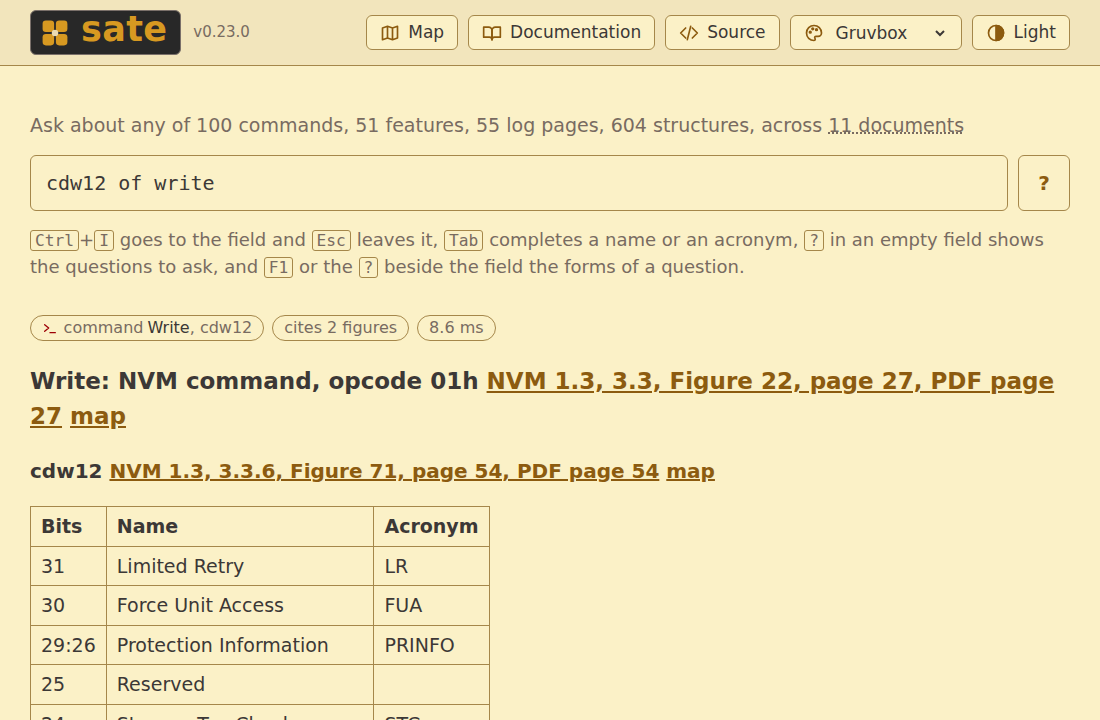
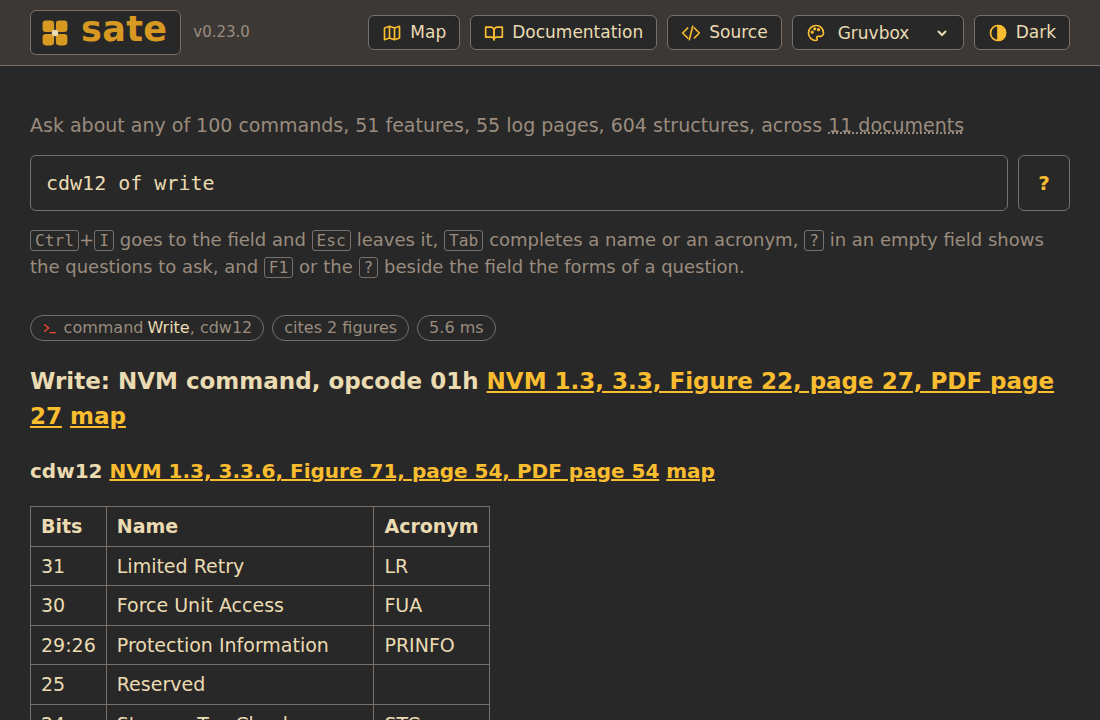
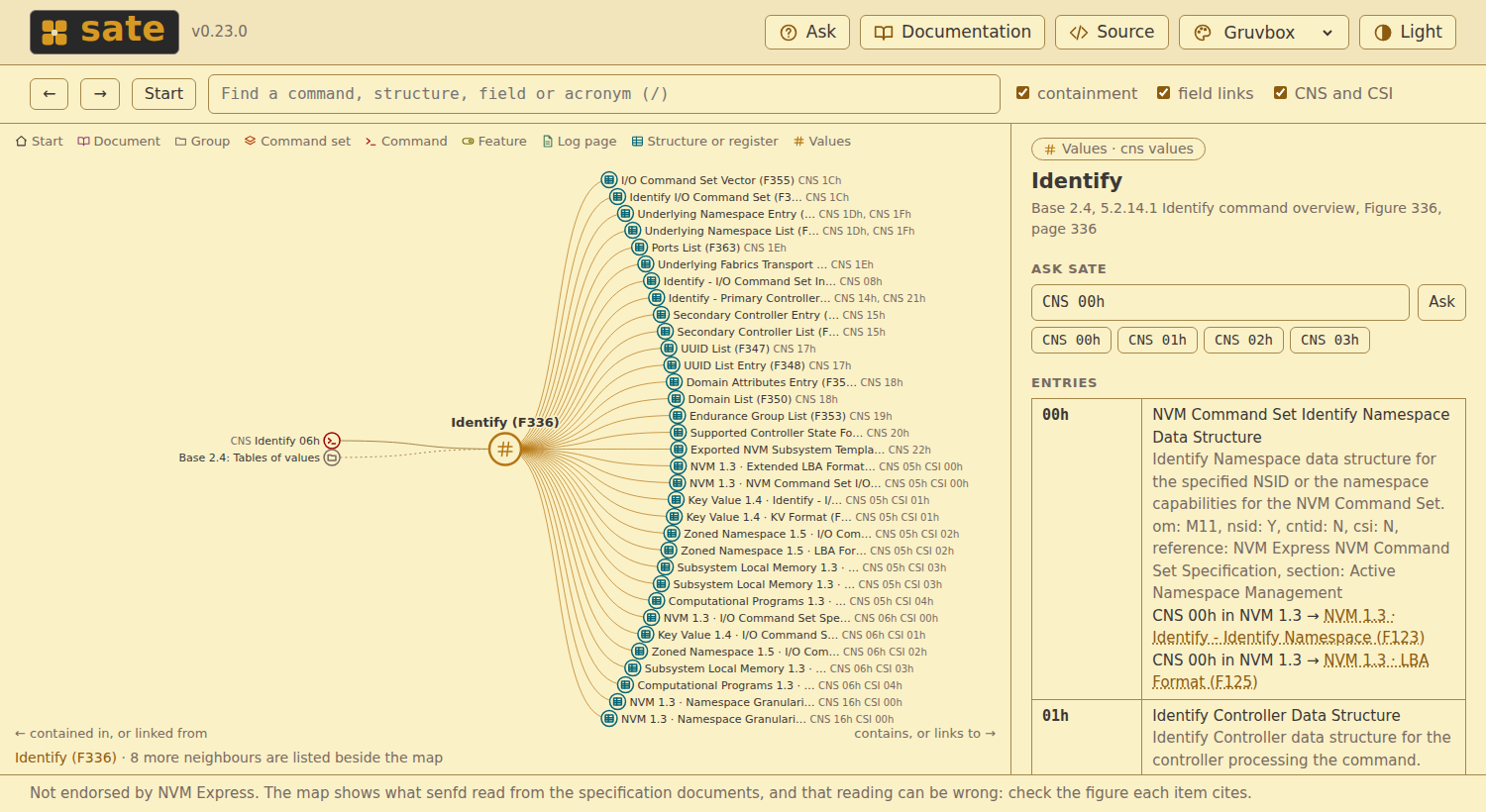
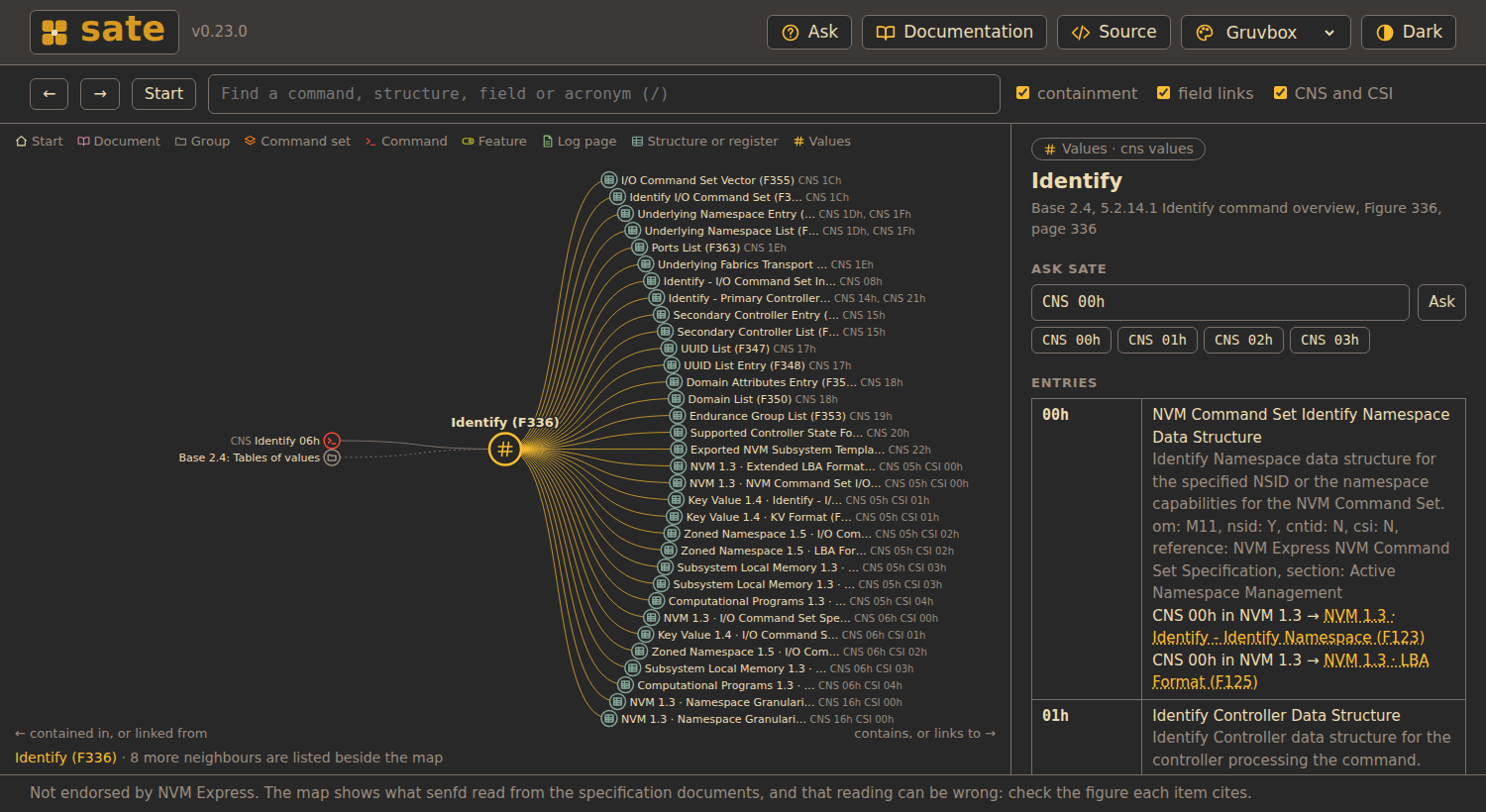
sate answers questions from a data model. Here the data model is the one that senfd makes of the NVMe specifications. You can ask sate about a command, a field, a register, a feature or a log page, in an interactive session with completion or on the command line. sate answers in milliseconds, and cites the figure with a link to the figure's page of the specification on nvmexpress.org, so that you can check the answer:
To try the web page on your own machine, without installing senfd, run the wizard with uvx:
$ uvx --from senfd@latest sate-preview-wizard
The wizard lists the specifications that it will download from nvmexpress.org, and asks before it makes the data model. The section on the web describes the wizard.
Caution
senfd is experimental and is not endorsed by NVM Express. senfd's data model is derived from the NVMe specifications, and you must be a member of NVM Express, Inc. to make the data model or use it. Read the notices at the end of this page first.
The pages under Use take the steps in order: install, make the data model, lint the documents, ask the expert, and, optionally, use sate with a language model.
What the data model is for
sate answers a question about a command, a field, a register, a
feature or a log page in milliseconds, from the data model. The page
ask the expert describes the questions that sate answers.
sate --llm answers questions put in your own words. A small language
model on your own CPU chooses the lookup, and the answer is the result of
the lookup; the language model writes no part of the answer. sate-mcp
gives a coding agent the lookups as tools, so that the agent checks an
opcode, a bit or an offset against its figure instead of recalling it. The
page with a language model describes both.
An early prototype generates xNVMe's specification headers from the data model, and every generated member cites its figure. The page code from the figures describes the prototype.
senfd lists each part of a figure that does not read as data, with the figure and the page, for the authors to fix. The page the linter describes the list.
Notices
Not endorsed by NVM Express. senfd is independent of NVM Express, Inc. NVM Express and NVMe are its trademarks.
Experimental. What senfd says can be wrong. Every answer cites the figure it is from; check it there before you rely on it.
The data model is under the specifications' terms. The data model is derived from the NVMe specifications, so the notice printed in each specification governs the data model. Members of NVM Express, Inc. may use the data model under their Participation Agreement and the Company's Intellectual Property Policy and Bylaws. To anyone else, the notice grants only the right to review, refer to or cite the specification. You must be a member of NVM Express, Inc. to make the data model or use it.
Nothing made from the specifications is distributed. senfd ships no specification and no data model, and its CI job, which reads the public PDFs, uploads nothing made from them. You can make your own data model from the public PDFs, as making the data model shows.